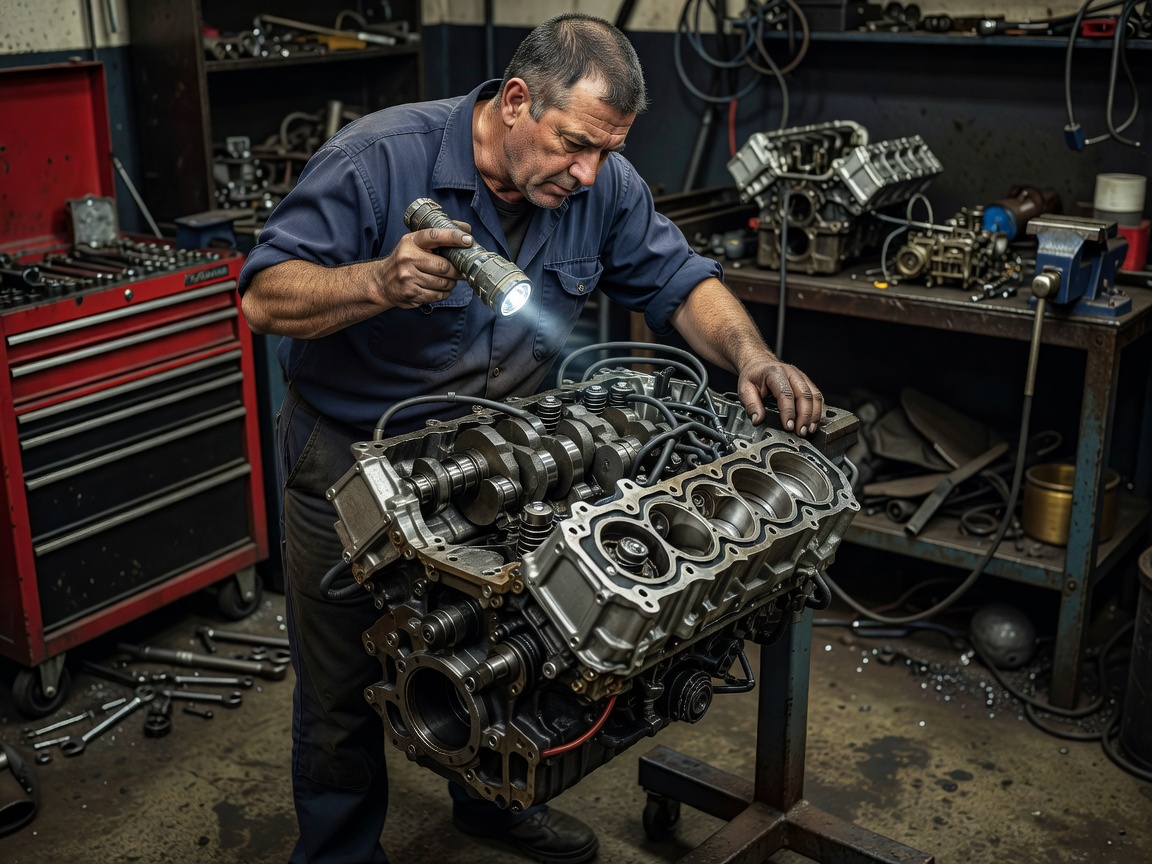
The engine is the beating heart of your classic vehicle. Rebuilding it is arguably the most intimidating, yet fundamentally rewarding phase of a restoration project. A properly rebuilt engine provides not just reliability, but the visceral thrill that classic motoring is famous for. When tackling an engine overhaul, precision, cleanliness, and strict adherence to factory tolerances are non-negotiable.
Phase 1: Extraction and Teardown
Before a single bolt is turned, document the entire engine bay. Photograph vacuum line routing, wiring harness connections, and bracket locations. Modern digital cameras make this trivial, yet many restorers skip this step and pay the price during reassembly. Once the engine is hoisted and mounted securely on a high-capacity engine stand, the teardown begins.
Every component removed should be inspected, tagged, and bagged. Do not rely on memory to recall which pushrod came from which lifter bore. Valvetrain components wear together, and mixing them up upon reassembly can lead to catastrophic failure. Use organized organizers for valves, springs, and lifters to maintain their orientation relative to the cylinders.
Phase 2: Machining and Block Preparation
Unless you possess specialized heavy machinery, block preparation is a task outsourced to a reputable automotive machine shop. However, understanding what they do is crucial for a restorer. The block will be hot-tanked to remove decades of grease and rust. Following cleaning, the machinist will inspect for cracks using magnetic particle inspection (Magnaflux).
- Cylinder Boring & Honing: If cylinder walls are scored, they must be bored out to accommodate oversized pistons. The final hone leaves a cross-hatch pattern crucial for piston ring seating.
- Decking: The block's deck surface is machined perfectly flat to ensure an airtight seal with the cylinder head gasket.
- Line Honing: Ensuring the main bearing saddles are perfectly aligned to prevent crankshaft flex and bearing starvation.
Phase 3: The Rotating Assembly
The crankshaft, connecting rods, and pistons make up the rotating assembly. Balancing these components dynamically is highly recommended. Factory tolerances of the 1960s and 1970s left much to be desired. A balanced rotating assembly reduces vibration, decreases wear on bearings, and allows the engine to rev smoother and faster.
When measuring bearing clearances, Plastigauge is a traditional method, but a seasoned builder relies on dial bore gauges and micrometers. Accurate measurement prevents the heartbreaking sound of rod knock upon first startup. Oil clearances must be meticulously verified; too tight and the engine seizes, too loose and oil pressure plummets.
Phase 4: Cylinder Heads and Valvetrain
The cylinder head dictates the breathing capacity and volumetric efficiency of the engine. A standard rebuild involves replacing valve guides, cutting new valve seats (often updating to hardened seats for compatibility with modern unleaded fuel), and installing new valve seals.
Performance builds may include porting and polishing—the process of smoothing the intake and exhaust runners to improve airflow. Selecting a camshaft must be done in harmony with the compression ratio, rear axle gearing, and intended vehicle use. A high-lift, long-duration camshaft sounds aggressive but can ruin the drivability of a heavy street cruiser.
Phase 5: Assembly and First Fire
Cleanliness during assembly cannot be overstated. The block must be scrubbed with hot soapy water and bristle brushes until a white lint-free cloth wiped inside the cylinder bores comes out spotless. Apply liberal amounts of high-zinc assembly lube to cam lobes and bearings to protect them during the critical initial moments before oil pressure builds.
| Component | Common Upgrades | Benefit |
|---|---|---|
| Ignition System | Electronic Distributor Conversion | Eliminates points bounce; reliable timing. |
| Fasteners | ARP Studs & Bolts | Higher tensile strength, prevents gasket blowing. |
| Oil Pump | High Volume / High Pressure | Maintains pressure in worn or high-clearance engines. |
The break-in process requires specific break-in oil, usually rich in ZDDP (zinc). Flat-tappet camshafts require the engine to be run at varying RPMs between 2,000 and 2,500 for the first 20 minutes to harden the lifter faces against the cam lobes. Missing this step guarantees cam failure.
Rebuilding an engine tests a restorer's patience, but turning the key and hearing that mechanical symphony roar to life for the first time is the ultimate reward in automotive restoration.