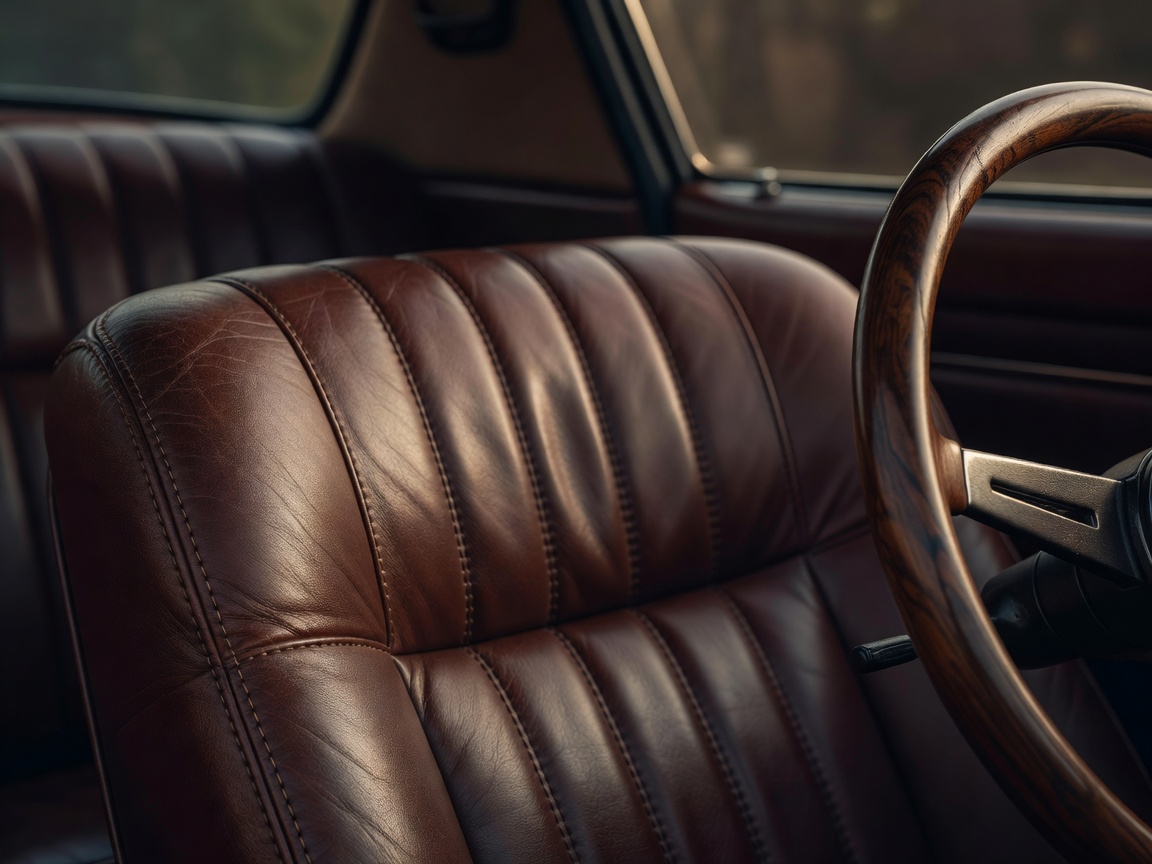
While the exterior of a classic car draws the crowds at local shows, the interior is where you, the owner, will spend all of your time. A beautifully restored cabin elevates the driving experience, turning a rattling, drafty old vehicle into a comfortable, tailored cockpit. Restoring an interior involves a mix of dismantling fragile plastics, manipulating heavy fabrics, and meticulously restoring seat frames.
Sound Deadening and Heat Insulation
Classic cars are notoriously loud and hot. Before installing new carpets, the bare steel floor pans must be treated. Modern sound deadening mats (butyl rubber backed by aluminum foil) revolutionized classic car interiors. Applied to the floor pans, firewall, roof, and inside door skins, these mats absorb acoustic vibrations, making doors shut with a solid "thud" rather than a hollow "clang".
Over the sound deadener, a layer of closed-cell foam or jute padding should be installed. This acts as a thermal barrier, preventing exhaust and engine heat from baking the occupants on long summer drives.
Seat Rebuilding
Throwing new covers over 50-year-old crumbling seat foam is a recipe for disaster. The foundation must be addressed first. Seat tracks must be removed, blasted, painted, and greased. Broken zig-zag springs require replacement or re-welding. Burlap, historically used between springs and foam, is often replaced with heavy canvas or wire mesh to prevent the foam from slicing through the springs over time.
- Foam Shaping: Pre-molded replacement foams are available for popular classics. For rare models, high-density upholstery foam must be sculpted using electric carving knives and angle grinders equipped with flap discs.
- Hog Rings: Upholstery covers are tensioned and secured to the seat frame using steel hog rings. Hog ring pliers are an inexpensive, essential tool for this task, ensuring the fabric is pulled tight and wrinkle-free.
Material Selection
Authenticity dictates material choice for concours restorations. However, restomods offer total freedom.
| Material | Pros | Cons |
|---|---|---|
| Vinyl (Naugahyde) | Durable, easy to clean, historically accurate for many 60s/70s cars. | Gets extremely hot in the sun, doesn't breathe, can crack over time. |
| Automotive Leather | Luxurious feel, wonderful aroma, breathes well. | Expensive, requires conditioning to prevent drying and shrinking. |
| Cloth (Houndstooth, Tweed) | Very comfortable in extreme temperatures, excellent grip for spirited driving. | Stains easily, can absorb odors, harder to clean. |
Headliners and Door Cards
Installing a suspended bow-style headliner is considered a black art by many. It requires threading steel rods through fabric sleeves, suspending them in the roof clips, and gently stretching the material outward toward the windshield and rear glass, gluing it under high tension. A heat gun is used to carefully shrink wrinkles, but too much heat will instantly melt a vinyl headliner.
Door cards (door panels) are often constructed on water-resistant fiberboard. Over time, leaking window seals cause these boards to warp and disintegrate. Rebuilding them involves tracing the old pattern onto fresh ABS plastic or treated board, cutting new holes for window cranks, and gluing new vinyl and foam backing with high-temp contact cement.
The interior restoration transforms the shell of the car into a finished product, requiring clean hands, extreme patience, and an eye for symmetry.